Zither Instruments Around the World
Explore zither instruments by region, construction, string layout, playing method and musical tradition. The collection covers instrument definitions, comparisons, tuning, performance, history, buying and care.
Zither Basics
Definitions, structural forms and terminology used across different members of the zither family.
What Is a Zither?
The meaning of the term, how zither strings relate to the instrument body and why the word can describe both a specific instrument and a wider family.
Read the articleTypes of Zithers
Board, box, tube, raft and trough forms, with the main structural differences between plucked, struck and bowed instruments.
Explore the typesZithers by Country
A country-based overview of instrument names, regional traditions and related zither forms around the world.
Browse by countryZithers by Region
Regional collections retain the names, construction traditions and playing practices associated with each instrument.
Asian Zithers
Guzheng, koto, gayageum, guqin and đàn tranh, including their strings, bridges, tuning and performance traditions.
Open Asian ZithersEuropean Zithers
Concert zither, kantele, gusli, scheitholt and related Alpine, Baltic, Slavic and fretted traditions.
Open European ZithersMiddle Eastern Zithers
Qanun, santur, psaltery and related plucked or struck instruments, with attention to construction and regional use.
Open Middle Eastern ZithersCompare Instruments
Side-by-side explanations based on body form, strings, bridges, tuning, sound and playing technique.
Qanun vs Zither
A qanun belongs to the wider zither family, but it differs from European concert zithers in body shape, string courses, pitch levers and playing technique.
Read the comparisonGuqin vs Guzheng
Two Chinese zithers compared through string count, movable bridges, tone, pitch shaping, playing position and musical setting.
Read the comparisonZither vs Autoharp
How the autoharp fits inside the broader zither family and how its chord-bar mechanism changes the way it is played.
Read the comparisonTuning, Playing, Buying and Care
Practical information for identifying an instrument, setting it up, learning its layout, assessing a purchase and maintaining it.
Tuning and Playing
Instrument-specific setup and playing information for beginners and owners.
Buying and Care
Purchase checks, typical costs, beginner choices and routine instrument maintenance.
Editorial responsibility
Zither terminology can differ by language, region and classification system. Source questions, corrections and missing context can be sent through the site contact page.
Latest Articles
The newest published articles from every category, ordered by publication date.
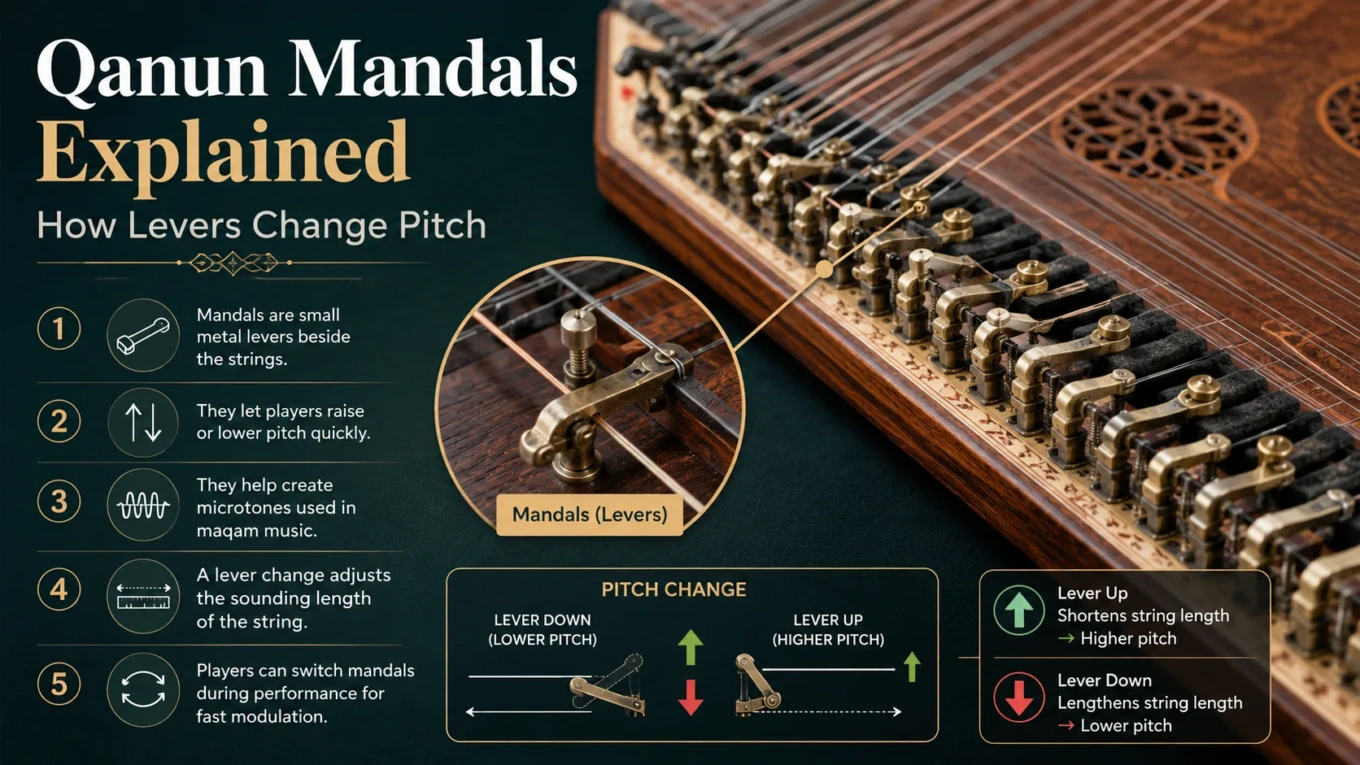
Qanun Mandals Explained: How Levers Change Pitch
Qanun mandals are the small metal levers that let a qanun change pitch while it is being played. They sit on the player’s left side of the instrument, near the tuning area of this trapezoidal plucked zither[1]. A raised or lowered mandal[2] changes the note of a string group, or course[3], by a small interval.…
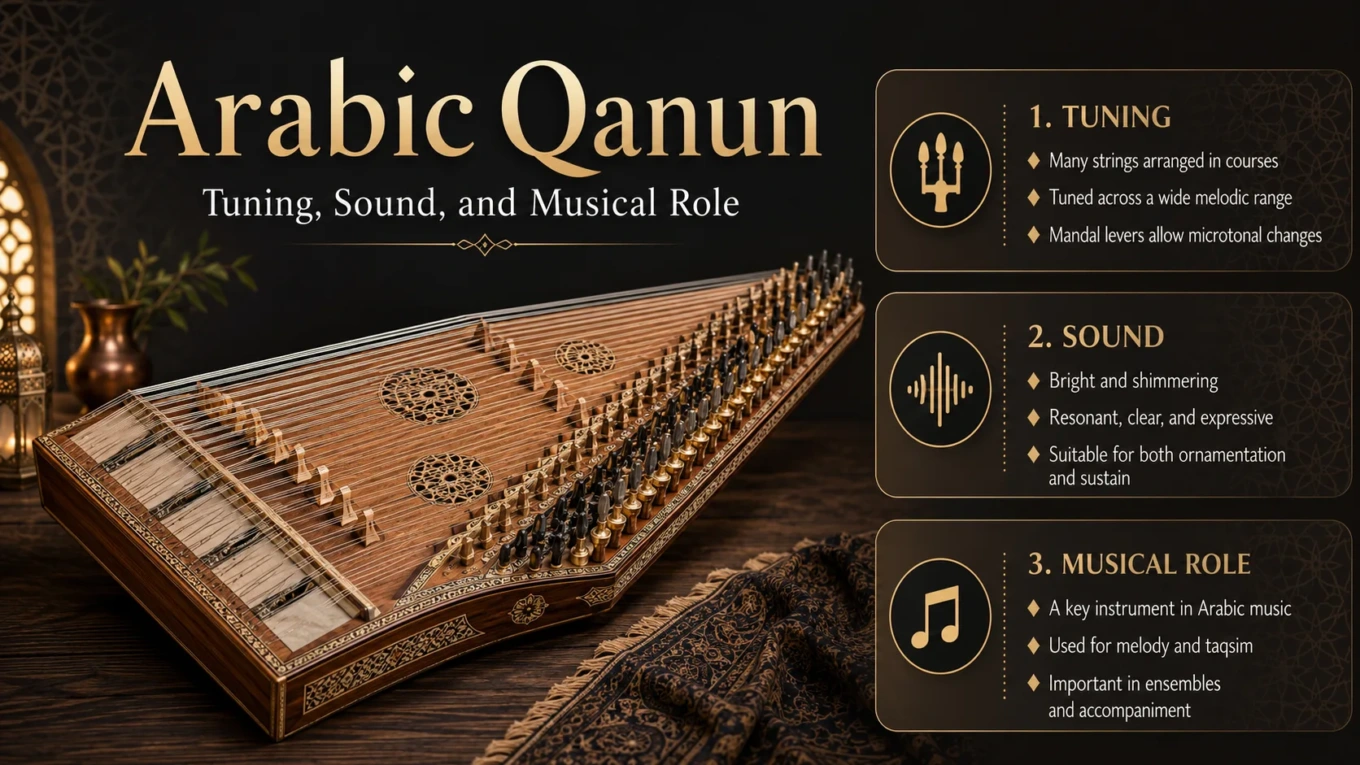
Arabic Qanun: Tuning, Sound, and Musical Role
The Arabic qanun is a trapezoidal plucked box zither[1] known for clear attack, ringing sustain, and highly flexible pitch control. Its musical identity comes from three linked features: groups of strings tuned in courses, a resonant body with a thin soundboard[2], and a lever system that lets the player adjust pitch for Arabic maqam performance…
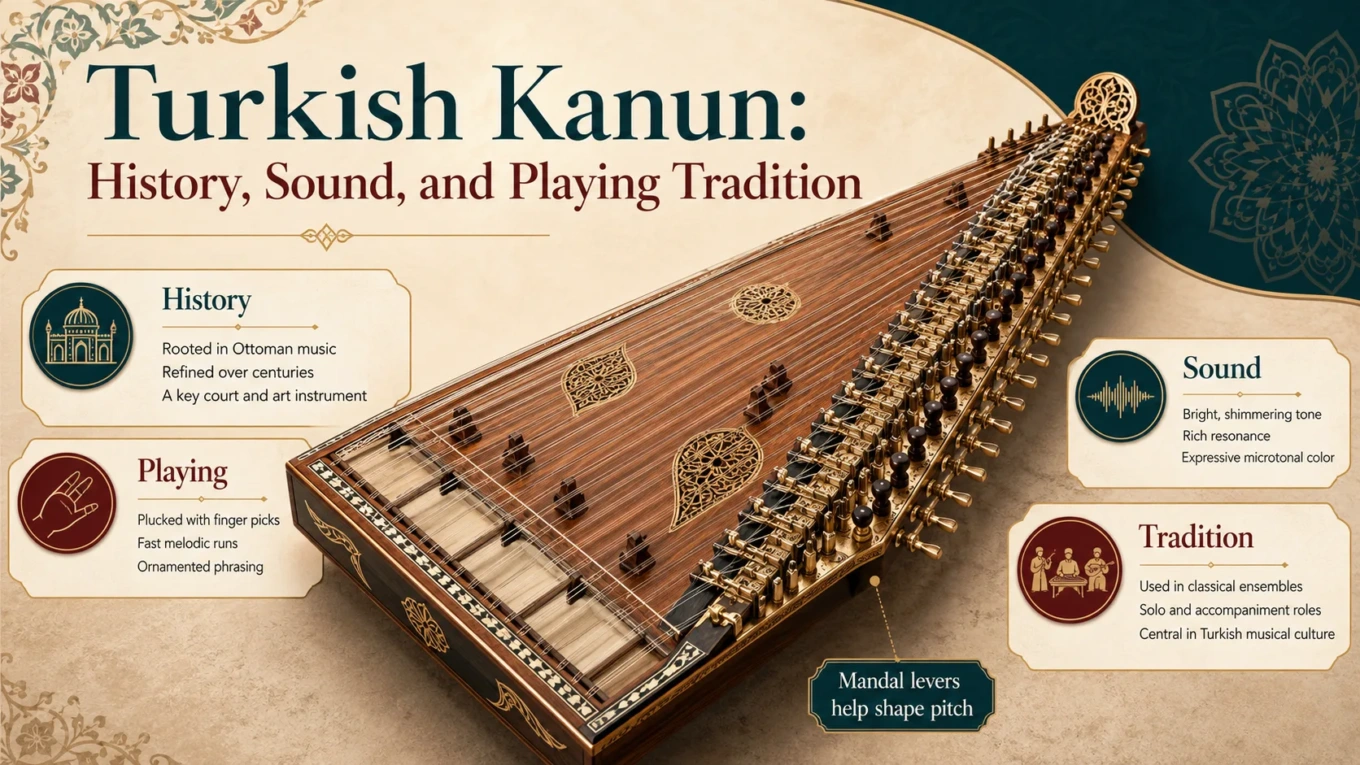
Turkish Kanun: History, Sound, and Playing Tradition
The Turkish kanun is a low, trapezoidal instrument with many strings stretched across a flat body, played with small picks on both index fingers. In organology it is a plucked zither[1]: the strings run across the body itself rather than along a separate neck. What makes the Turkish form especially refined is its mandal system,…
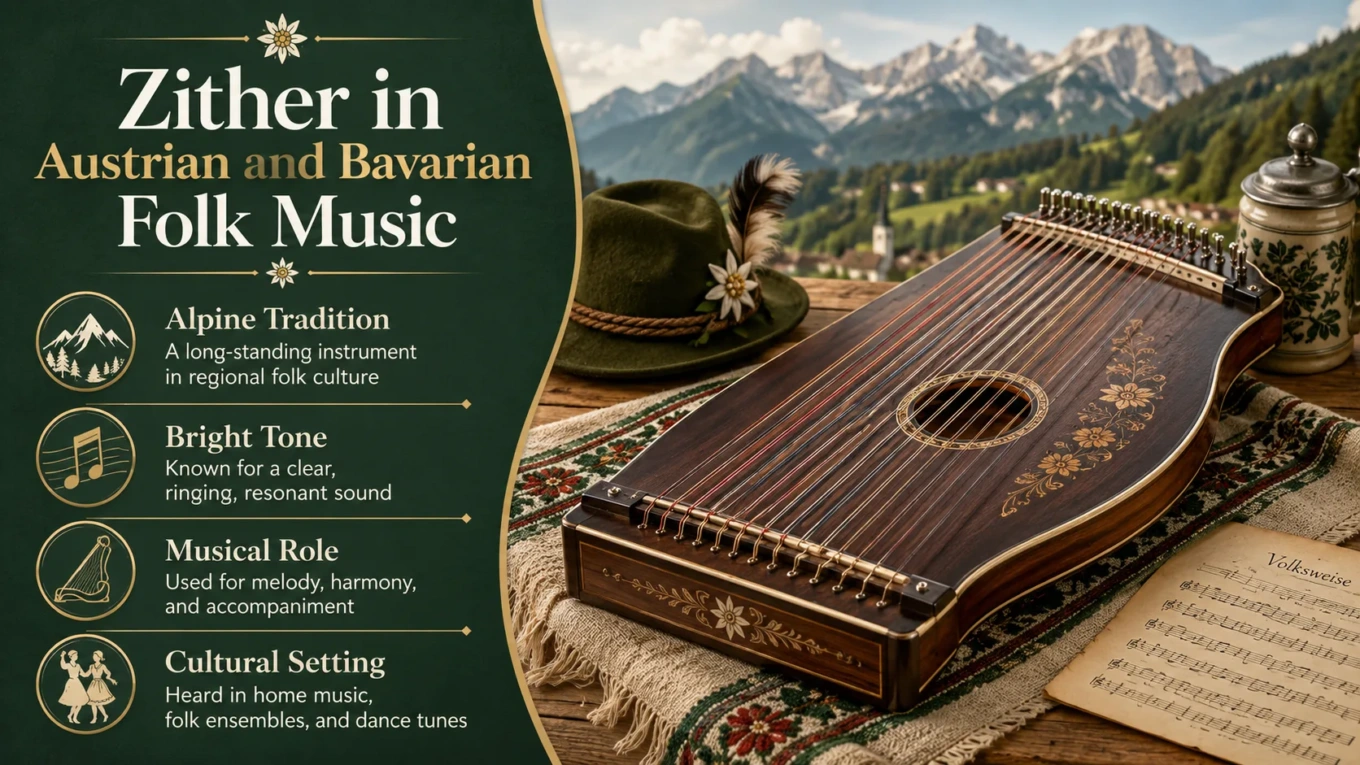
Zither in Austrian and Bavarian Folk Music
In Austrian and Bavarian folk music, the zither is not just a flat string instrument placed on a table. It is a compact melody-and-accompaniment instrument with a clear singing line, open harmonic strings, and a tone that can carry a dance tune without needing a large ensemble. In this regional setting, “zither” most often points…
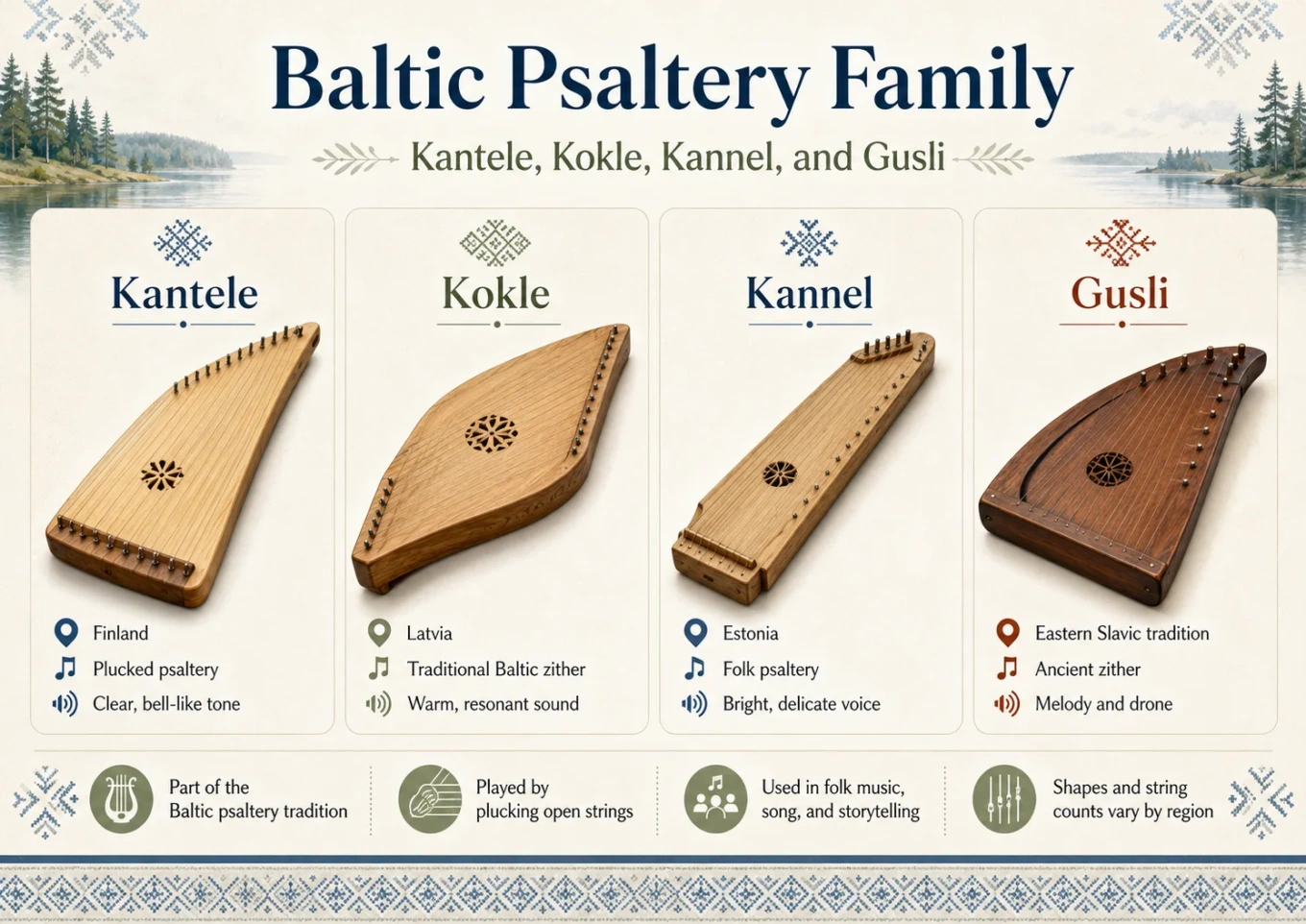
Baltic Psaltery Family: Kantele, Kokle, Kannel, and Gusli
The Baltic psaltery family is a northern group of plucked string instruments built around a simple idea: strings run across a shallow wooden body and sound as open strings. In organology, these instruments sit within the wider zither[1] and chordophone[2] category, yet their shapes, names, tunings, and playing habits differ by language area. Kantele, kokle,…
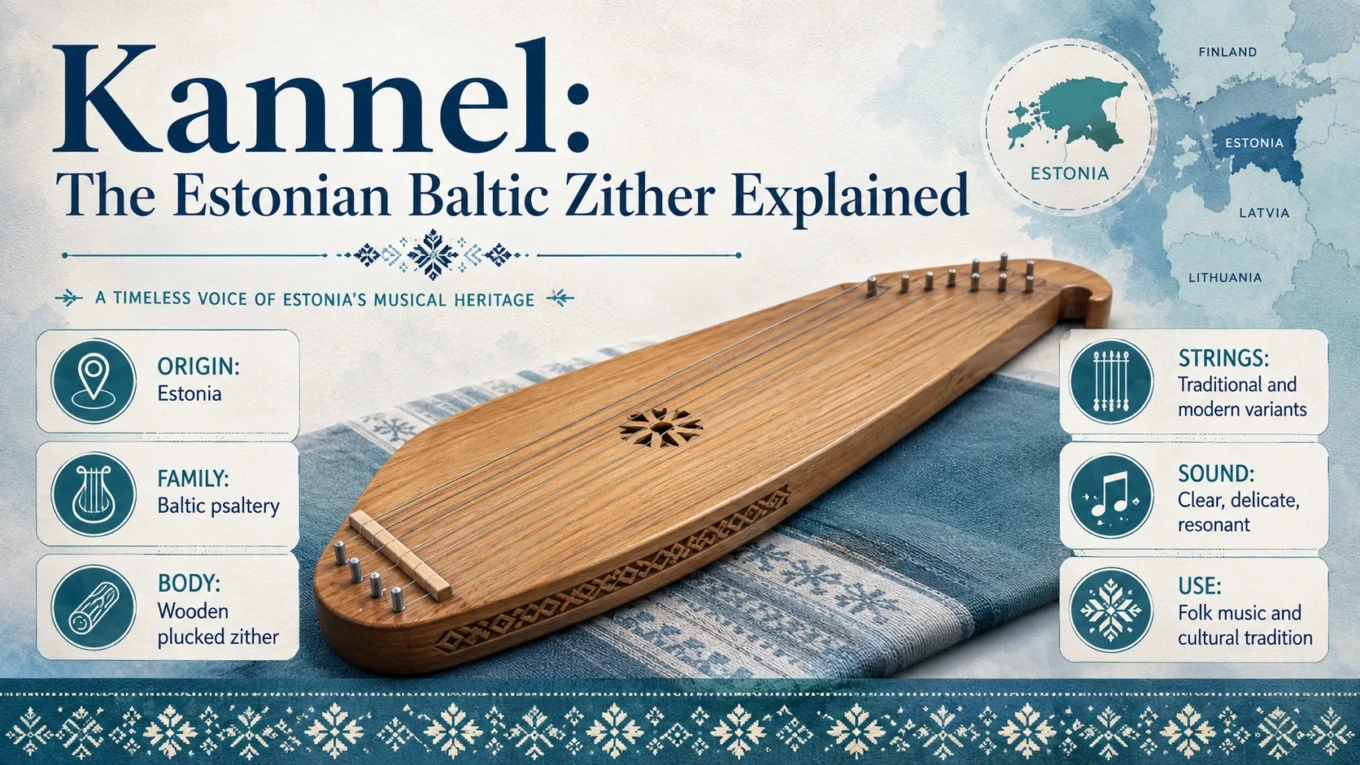
Kannel: The Estonian Baltic Zither Explained
Kannel is the Estonian member of the Baltic zither tradition: a plucked chordophone[1] whose strings run across a wooden body rather than along a separate neck. In its older folk forms it is a small, direct instrument with a clear outline, open strings, and a close link to song and dance. In its newer concert…
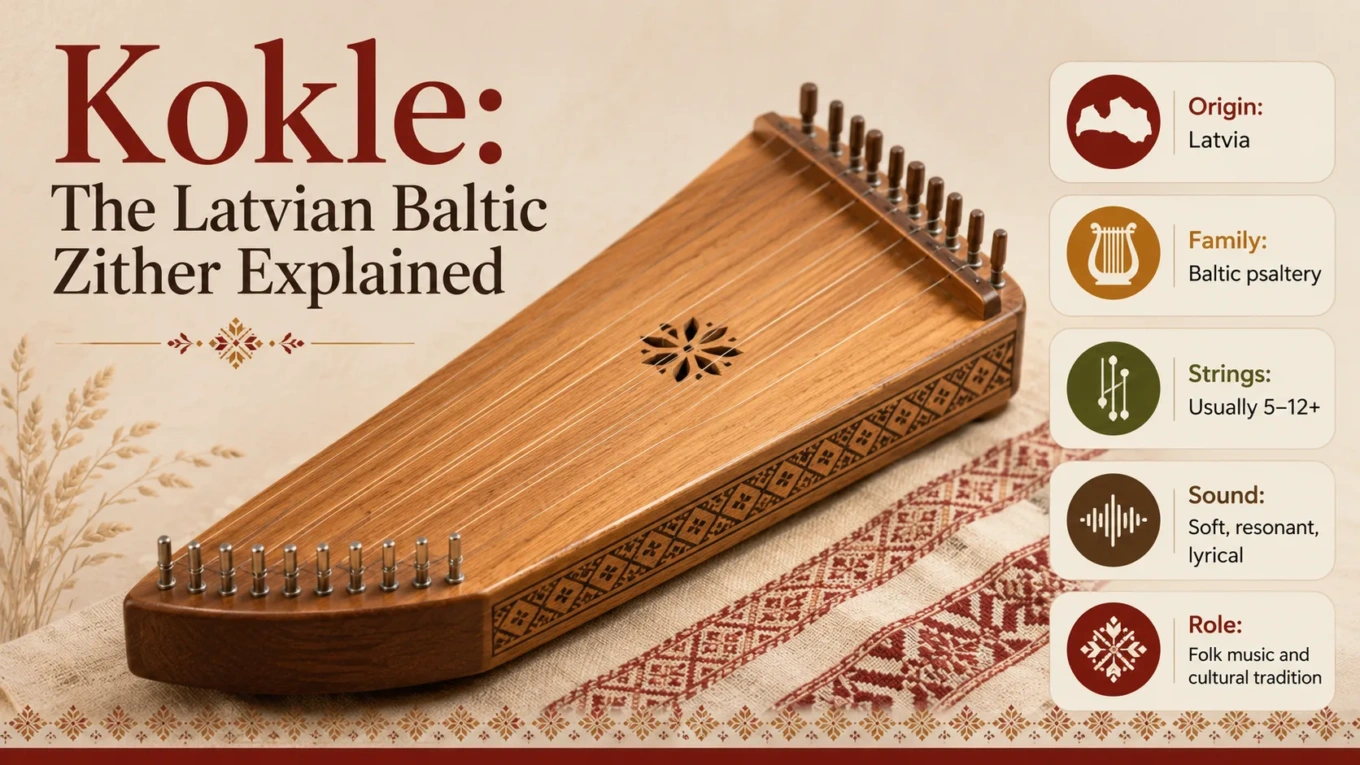
Kokle: The Latvian Baltic Zither Explained
The kokle is a Latvian plucked zither[1]: its strings run across a resonant wooden body rather than over a neck. In organology, it is a chordophone[2] and belongs to the Baltic psaltery[3] family, alongside related instruments such as the Lithuanian kanklės, Estonian kannel, Finnish kantele, Livonian kāndla, and some northwestern Russian gusli forms. Its shape…
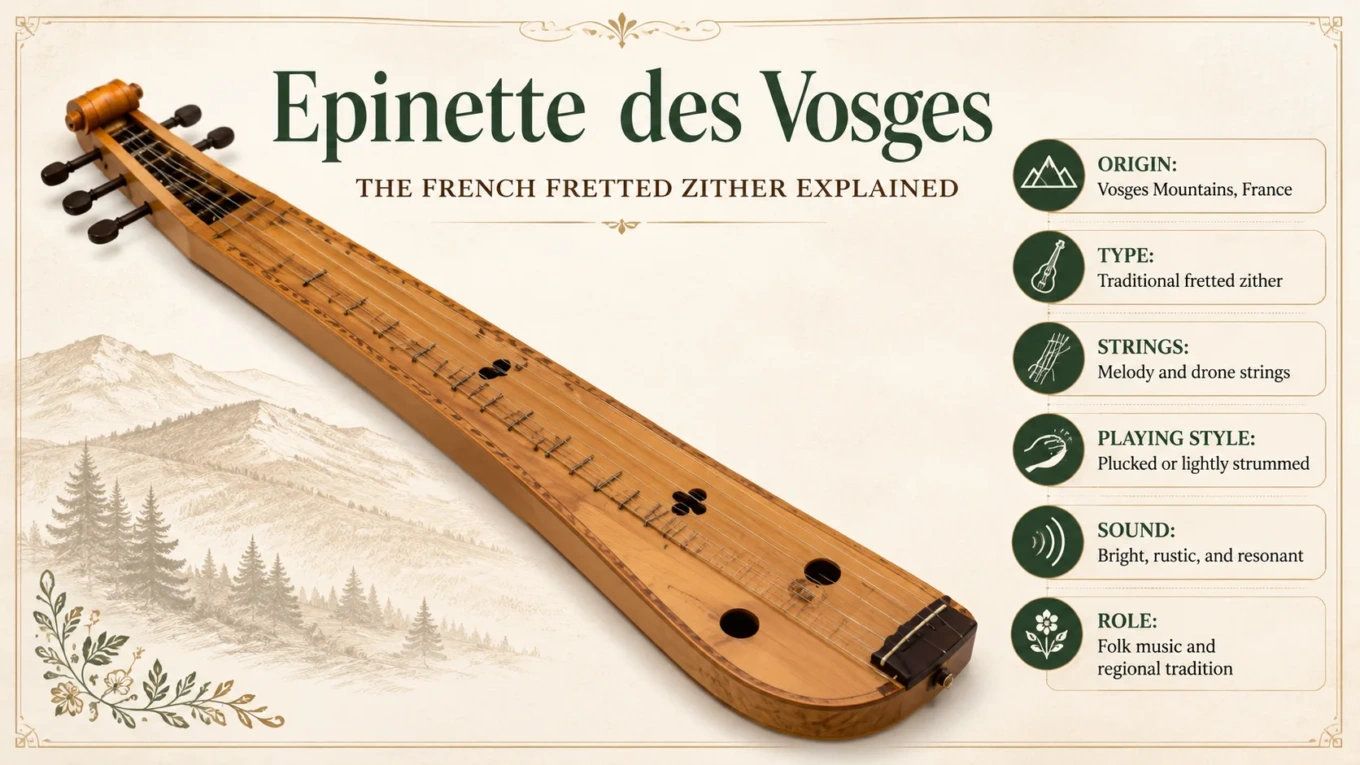
Epinette des Vosges: The French Fretted Zither Explained
The Épinette des Vosges is a narrow French fretted zither[1] from the Vosges region, built around a simple idea: a few melody strings are stopped against frets, while open drone strings keep a steady tonal ground. It belongs to the broader zither family[2], but it is not the same instrument as the concert zither, the…
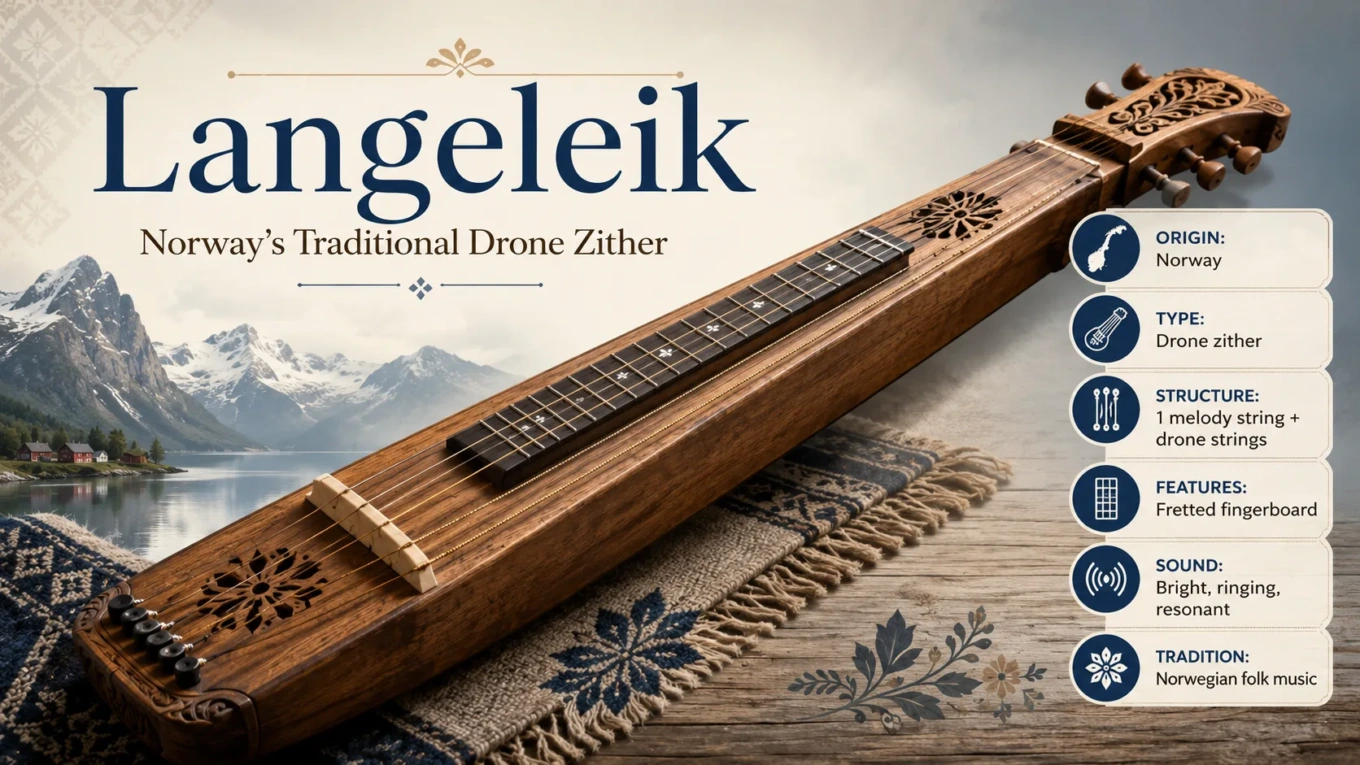
Langeleik: Norway’s Traditional Drone Zither Explained
The langeleik is a Norwegian drone zither: a long, narrow string instrument that sets one fretted melody line against several open drone strings. Its sound is not built around chord changes in the modern guitar sense. It is built around a steady tonal floor, a bright plucked rhythm, and a melody that moves over a…